
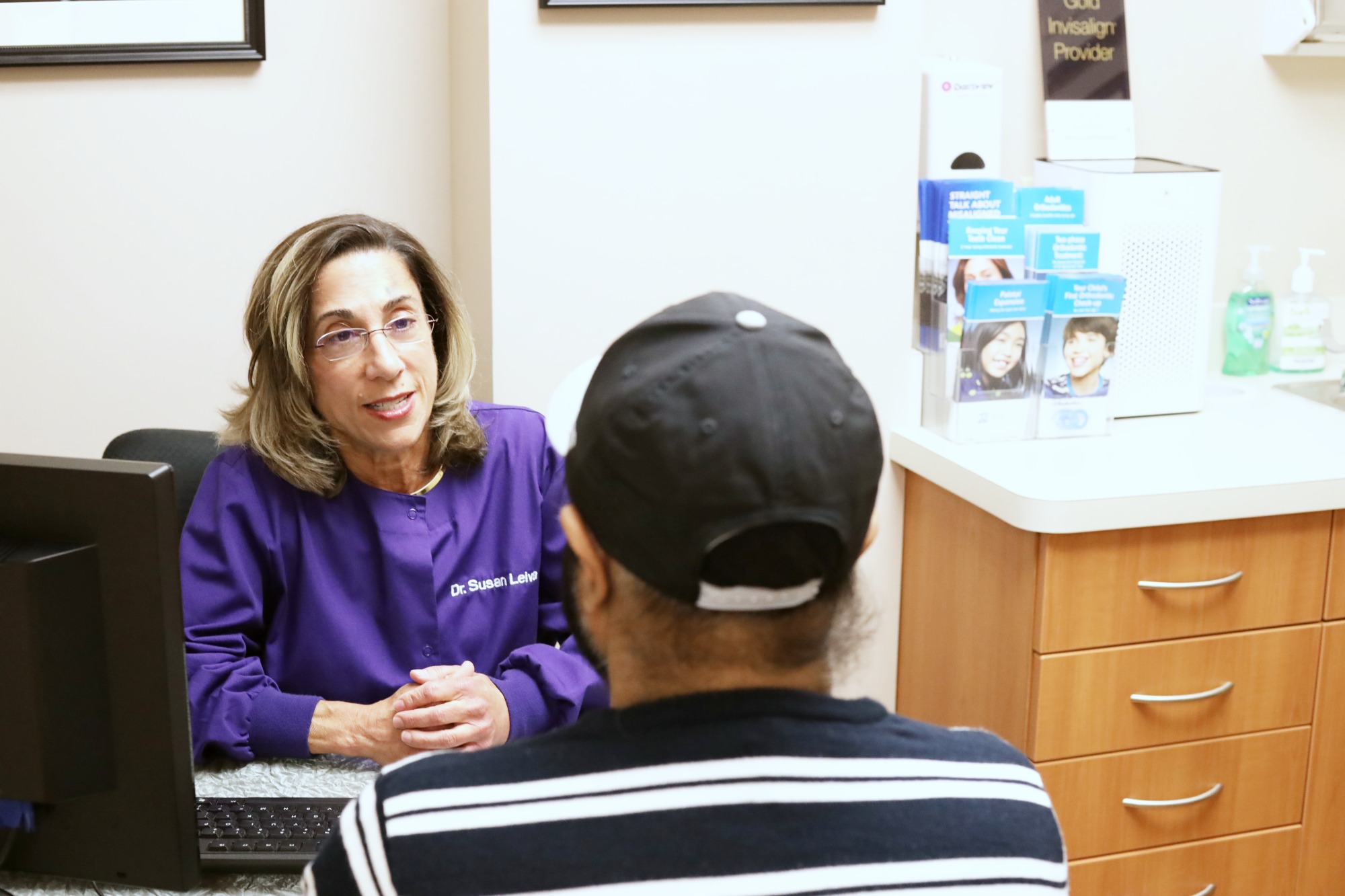
Why Cranbury families choose Invisalign over traditional braces usually comes down to three things: how it looks, how it feels, and how well it fits into an already-packed week. At Monroe Orthodontics, Dr. Susan Leiva helps you and your family compare both options honestly, then pick the one that matches the diagnosis.
What Is Invisalign?
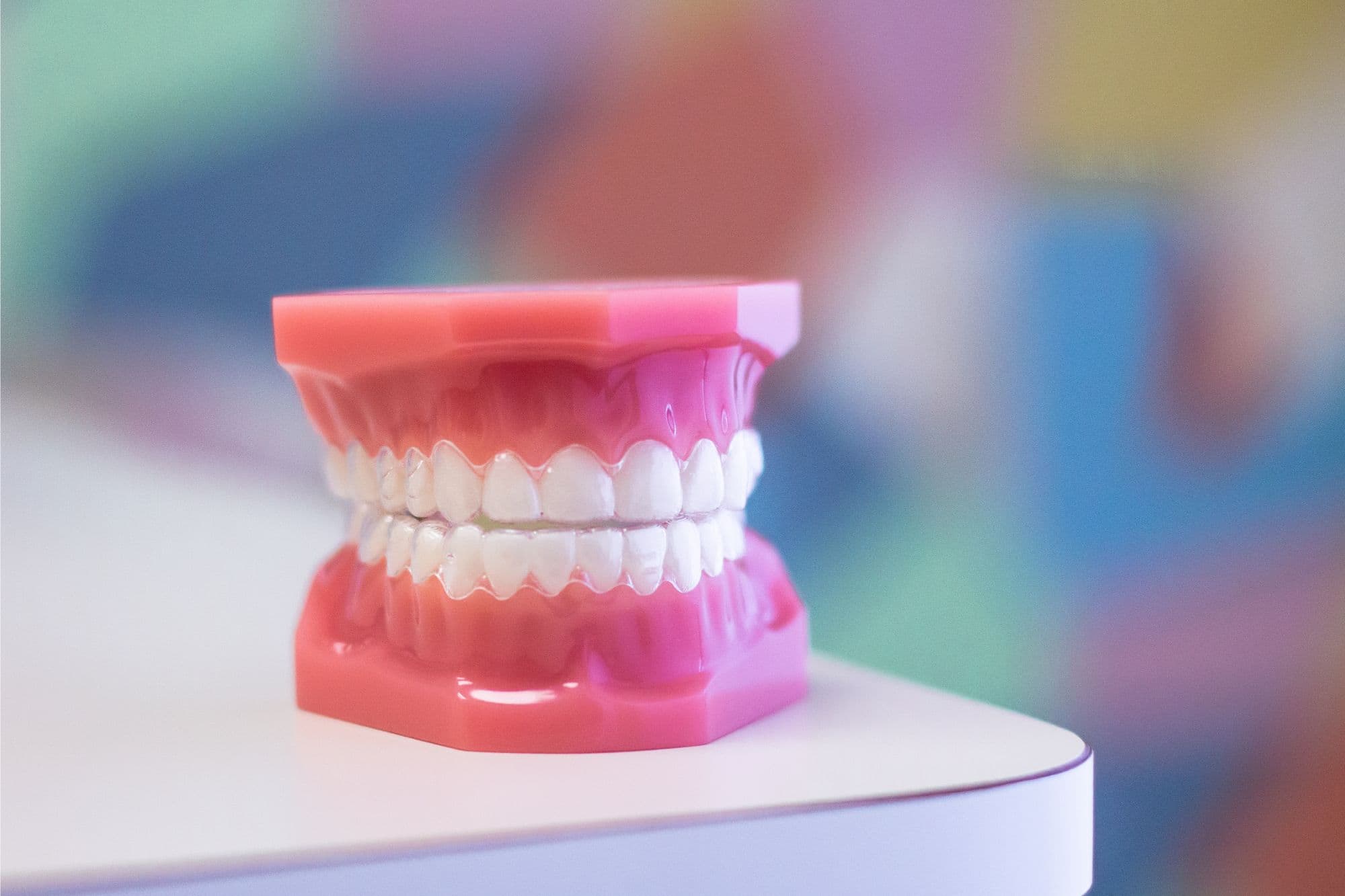
Invisalign is a series of custom-made clear thermoplastic aligners that gently shift your teeth into better position. Each set is worn about 20 to 22 hours a day and swapped for the next one roughly every one to two weeks. It treats crowding, spacing, and many bite issues without brackets or wires.
The aligners come out for meals, brushing, and flossing. That single feature changes daily life more than most people expect.
Invisalign works well for crowded front teeth, gaps, mild to moderate bite concerns, and relapse after earlier braces. Adults in Cranbury who wore braces as kids and skipped their retainers are some of our happiest Invisalign wearers.
Instead of goopy impression trays, Dr. Leiva uses a digital scanner to capture your teeth in minutes. That scan feeds a 3D plan showing how each tooth will move and in what order. Painless digital X-Rays round out your records.
One clarification worth making: Invisalign is a brand of clear aligner therapy, not a separate branch of orthodontics. The biology is identical to braces. Controlled, steady force moves teeth through bone, and an orthodontist directs that force. The tool changes, but the expertise behind it shouldn’t.
How Invisalign Treatment Works, Step by Step
Invisalign treatment starts with a free consultation and orthodontic records, followed by a digital 3D scan that Dr. Leiva uses to plan every tooth movement. Your aligners arrive a few weeks later, and you’ll wear each set as directed with progress checks every 6 to 10 weeks. Retainers hold your new smile afterward.
Here’s how it goes:
- Free, no-pressure consultation. Come in or start with a virtual consultation. Dr. Leiva examines your teeth, bite, and jaw growth, then takes photos and painless digital X-Rays to build a full picture.
- Digital scan and preview. A handheld scanner creates a 3D model of your teeth. From there, you’ll see a simulation of the projected movement before you commit to anything.
- Aligner fabrication. Your customized treatment plan goes to the lab. Small tooth-colored attachments may be bonded to a few teeth so the aligners can grip and rotate them precisely.
- Active wear. Wear each set 20 to 22 hours a day, switching on the schedule Dr. Leiva gives you. Progress checks happen every 6 to 10 weeks, and some visits can be handled remotely.
- Retainers. Teeth like to drift back toward where they started. Retainers protect the work you just did, which is how you get a lifetime of wonderful smiles instead of a temporary one.
Most cases run somewhere between 6 and 18 months, though a significant bite correction can take longer. Timing depends on your diagnosis and your wear time, not on a standard package.
Benefits Cranbury Families Notice Most
Cranbury parents and teens tend to notice the same handful of advantages once treatment is underway:
- Nearly invisible. School photos, yearbook shots, weddings, job interviews, and sales presentations all go on as planned. Nobody has to know you’re changing smiles.
- Smooth edges, fewer surprises. No wires to poke a cheek and no brackets to pop off during a sandwich. Emergency repair visits drop way down.
- Brushing and flossing stay normal. Take the aligners out, clean your teeth the way you always have, put them back in. Straight teeth are healthy teeth, and easier hygiene supports both.
- Eat what you want. Popcorn, bagels, corn on the cob, caramel. No food restrictions, because the aligners come out first.
- Great for athletes and musicians. Wrestlers, basketball players, trumpet and clarinet players all appreciate removable aligners. Mouthguards fit over teeth, not hardware.
- Fewer trips to the practice. Longer intervals between visits and virtual check-in options mean fewer half-days off work and fewer pickups from school.
- You can see where you’re headed. The digital preview lets teens and parents look at the projected outcome before saying yes. Seeing it makes the decision a lot easier.
There’s a quieter benefit, too. A straight smile builds confidence, and confidence shows up in how kids carry themselves at school and how adults walk into a room.
Invisalign vs. Traditional Braces: Side-by-Side Comparison
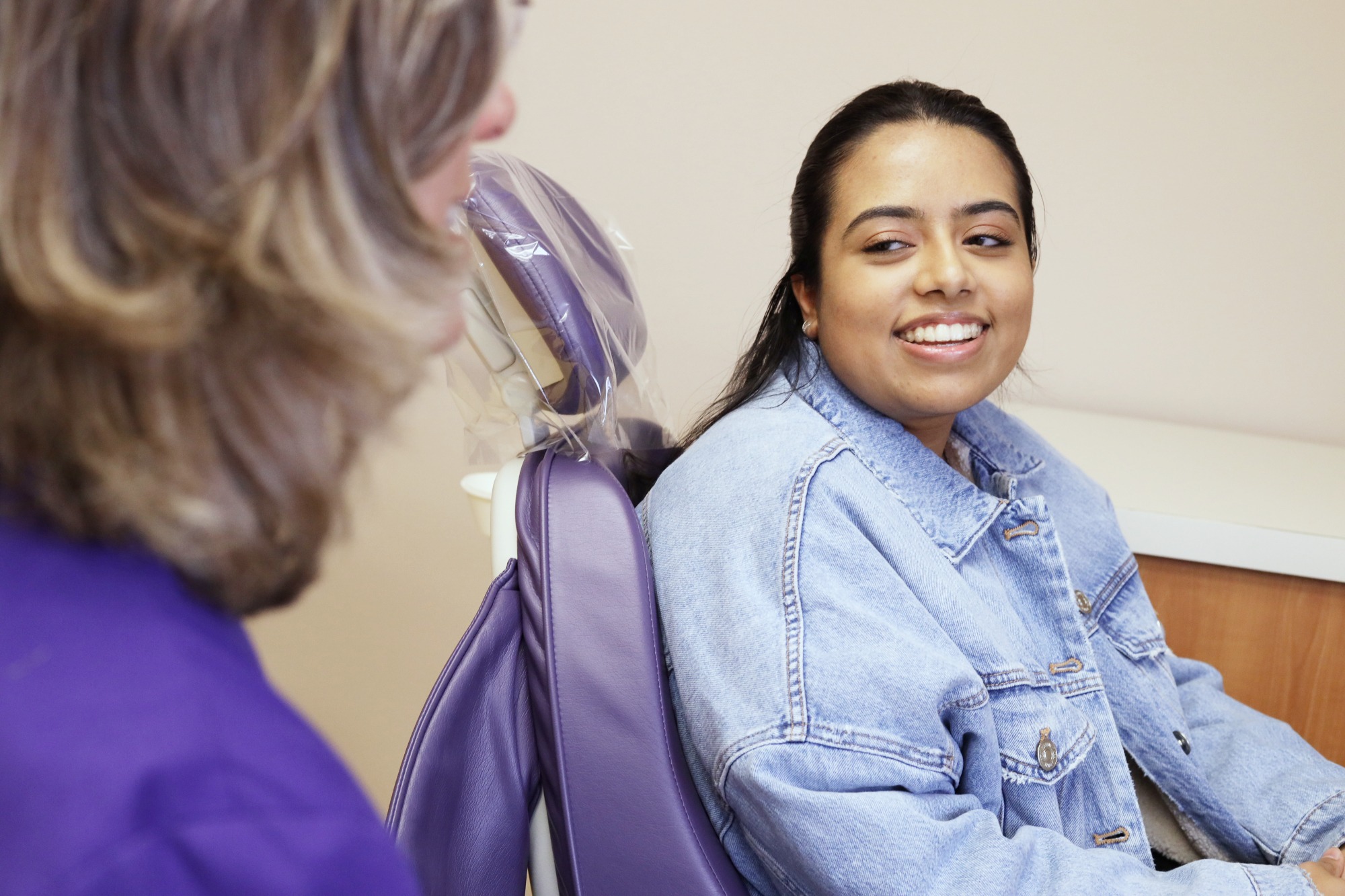
Both systems work. They just work differently, and the differences matter depending on who’s wearing them.
| Feature | Invisalign | Traditional & Clear Braces |
|---|---|---|
| Appearance | Nearly invisible aligners | Metal brackets, or clear braces that blend with tooth color |
| Comfort | Smooth plastic edges, mild pressure with each new set | Occasional wire or bracket irritation, especially early on |
| Removability | Removable for meals, cleaning, sports, photos | Bonded in place until the day we take off your braces |
| Food restrictions | None; aligners come out to eat | Avoid hard, sticky, and chewy foods throughout treatment |
| Hygiene | Brush and floss normally | Requires threaders, interproximal brushes, and extra time |
| Visit frequency | Every 6 to 10 weeks, some checks virtual | Typically every 4 to 8 weeks for adjustments |
| Compliance factor | Depends on 20 to 22 hours of daily wear | Works around the clock with no wear-time decisions |
| Best suited for | Crowding, spacing, mild to moderate bites, adults, motivated teens | Severe rotations, larger bite corrections, mixed dentition in younger kids |
That compliance row is the honest dividing line. Braces stay bonded and keep working whether a teen remembers or not. Invisalign rewards consistency, so it shines with self-motivated wearers and adults who won’t leave the trays in a napkin at lunch.
Braces still hold an edge in certain situations. Severely rotated teeth, significant skeletal bite differences, and treatment plans that overlap with growth in a younger child often respond better to fixed appliances. Sometimes Dr. Leiva recommends a hybrid: a short phase of braces followed by aligners, or the reverse.
Treatment time is driven by your case rather than by the system you pick. The right choice depends on the diagnosis, not the label on the box. That’s exactly what a free consultation sorts out.
Are You or Your Cranbury Teen a Good Candidate?
Most people who want straighter teeth are candidates for something. The question is whether Invisalign is the best tool for your specific bite.
Often a strong fit:
- Crowded front teeth or noticeable gaps
- Mild to moderate bite concerns
- Relapse after braces years ago
- Adults and working professionals who’d rather not wear brackets
- Teens with all permanent teeth erupted and the discipline to keep trays in
May do better with braces or a hybrid plan:
- Severe skeletal bite differences
- Impacted teeth that need guided eruption
- Extensive tooth rotations
- Younger children still in mixed dentition
For teens, responsibility matters as much as tooth position. Invisalign for teens includes built-in compliance indicators that fade with wear, so parents can tell at a glance whether the trays are actually being worn. It’s a small feature that prevents a lot of guessing.
Two things apply to everyone: healthy gums and no untreated cavities. If your general dentist needs to address something first, we’ll coordinate the timing.
According to the American Association of Orthodontists, roughly one in four orthodontic patients is an adult, so adult treatment is far more common than most people assume. Only an in-person exam with full records can confirm candidacy, which is why the evaluation comes first and the recommendation second.
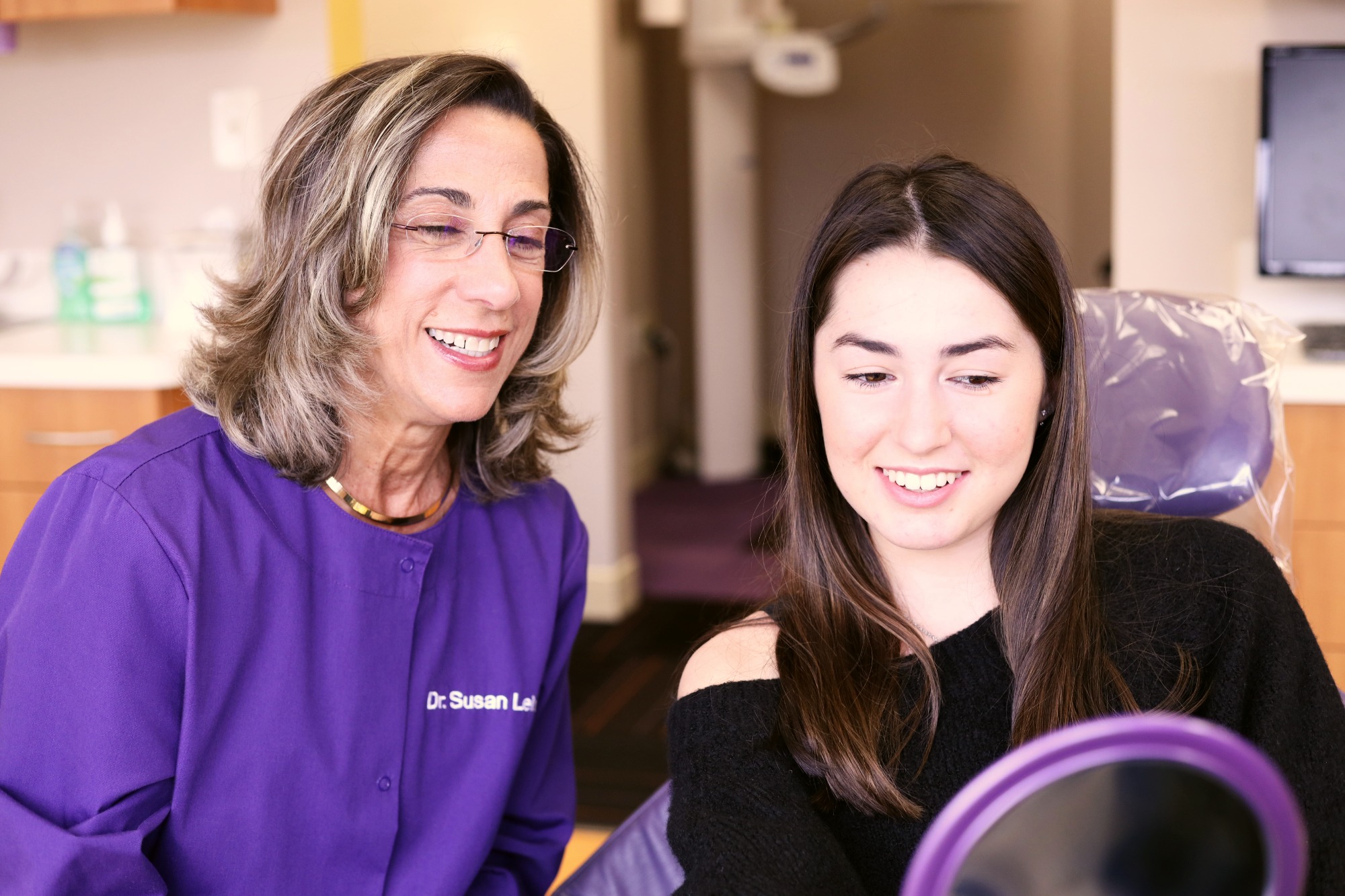
Frequently Asked Questions About Invisalign vs. Braces in Cranbury
Does Invisalign work as fast as braces?
For many cases, yes. Timing is driven by how much movement your teeth need, not by which appliance you wear. Straightforward crowding or spacing can finish in well under a year, while larger bite corrections take longer with either system. Dr. Leiva will give you a realistic range once she’s reviewed your records.
Does Invisalign hurt more than braces?
Generally, no. Expect mild pressure for a day or two after switching to a new set, which tells you the aligners are doing their job. Because there are no wires or brackets, most people report fewer sore spots on the cheeks and lips. Soft foods and a warm salt water rinse help during those first couple of days.
How many hours a day do aligners need to be worn?
Plan on 20 to 22 hours daily. Take them out to eat, to drink anything other than water, and to brush and floss. Then put them right back in. Consistency is the single biggest factor in staying on schedule.
Can teens play sports and instruments with Invisalign?
Absolutely. Aligners come out for practices and games, and a mouthguard fits comfortably over teeth without hardware. Band and orchestra students adapt quickly, too, since there are no brackets changing how the mouthpiece sits. Just keep the case handy so trays don’t end up lost in a gym bag.
Does insurance cover Invisalign?
In most plans, yes. Orthodontic benefits usually apply to Invisalign exactly as they would to braces, drawing from the same lifetime orthodontic maximum. Our team will verify your coverage before you start your smile.
What happens if I lose an aligner or skip a few days?
Call the practice right away and go back to wearing your previous set in the meantime. That keeps your teeth from drifting while we decide whether to order a replacement or move you forward. Missing a few days isn’t a disaster, but telling us early keeps your finish date on track.
Deciding between Invisalign and braces gets a lot simpler once you see your own 3D scan. Dr. Leiva and the team at Monroe Orthodontics will walk you through both, explain what your bite actually needs, and answer every question before you commit to anything. Orthodontists are dentists first, and only about 6 percent of dental school graduates go on to complete the extra specialty training the title requires, so the guidance you get here comes with specialist-level training behind it. Bring your list of questions, however long or however small, because none of them are ones we’d rather skip.
You will never be a number on a patient file to any of us.
Our practice welcomes Cranbury families at every stage of life, whether you’re weighing Invisalign for a busy teen, revisiting teeth that drifted after childhood braces, or finally thinking about changing smiles for yourself. A free consultation is the simplest next step, in person or virtually, and it gives us time to talk through your comfort, concerns, and smile dreams before anything gets scheduled. Request your free consultation whenever the timing feels right for your family, and we’ll take it from there.
 Dr. Leiva